Biography
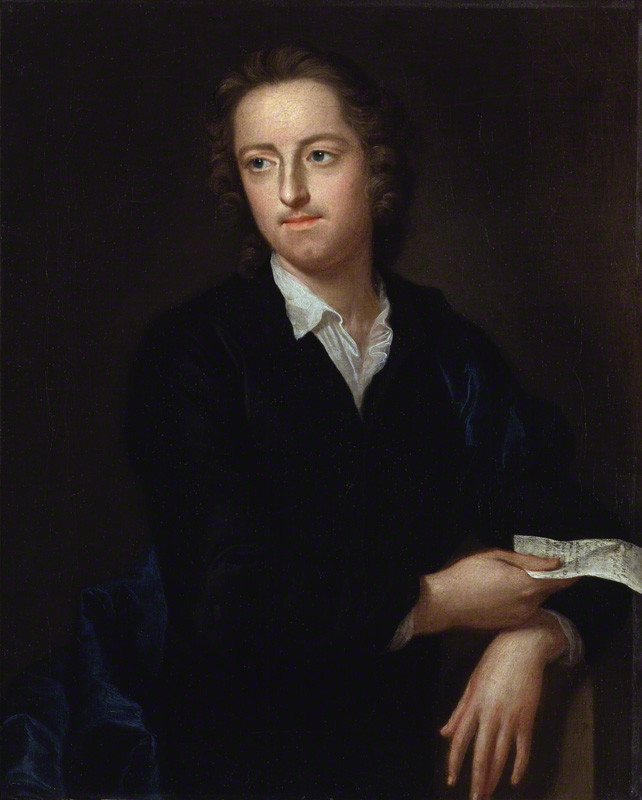
Thomas Gray
(1716-1771)
© National Portrait Gallery,
London
This biographical sketch is intended as a first general approach to the man and his works. The account is divided into three major parts: the early years (1716-1741), which includes Gray's childhood, his time at Eton College, his friendship with Ashton, West, and Walpole, his early years at Cambridge, and his Grand Tour; the middle years (1742-1758), which gives an account of Gray's early poems, his life after his return to Cambridge, the history of the "Elegy", and concludes with the publication of his Pindaric Odes; the later years (1759-1771), which contains Gray's life and studies from his Norse and Welsh odes to his final composition, his travels in several regions of Great Britain, as well as his later acquaintances. A brief conclusion at the end highlights Gray's achievements and poetic legacy. This account largely focuses on Gray's life in relation to his poetry, it touches only briefly on his other important and fruitful activities, namely his extensive scholarly work and his letter-writing. The reader should consult the list of works cited, the printed full-length biographies section in the bibliography, and the Thomas Gray resources part of the Related Links section for more detailed information. Please send your suggestions, corrections, and additions to the editor.
The early years (1716-1741)
Thomas Gray was born on 26 December 1716 at 41 Cornhill, London, near St Michael's Church, in what was then a small milliner's shop kept by his mother. He was the fifth and only surviving child of twelve children born to Dorothy (1685-1753) and Philip Gray (1676-1741). His father Philip, a "money-scrivener" in the City of London by profession, had married his mother Dorothy, whose maiden name was Antrobus, in 1709. Gray's mother, originally from a Buckinghamshire family, kept the small shop with her elder sister Mary (1683-1749), but the premises belonged to her husband Philip and the two women had to support themselves and the children by its profits. The marriage was an unhappy one and it was at Dorothy's expense that Thomas was removed from this unhealthy home environment to Eton College in 1725, where his maternal uncle Robert (1679-1729) who was at Peterhouse, Cambridge, and then assistant master at Eton, took care of the boy and his education. Dorothy's other brother William (1688-1742) was at King's College, Cambridge, and also an assistant master at Eton.
From 1725 to 1734 Gray attended Eton College, located opposite Windsor Castle on the other side of the Thames. Thomas was a studious and literary boy and he flourished at Eton. His closest, like-minded school friends were Horace Walpole (1717-97), the son of prime minister Sir Robert Walpole, Richard West (1716-42), whose father was a Lord Chancellor of Ireland, and Thomas Ashton (1715-1775). Together they formed the "quadruple alliance" (Walpole), a lasting friendship based on their shared academic and non-academic interests. They gave themselves nicknames taken from poetry and mythology, Gray was "Orozmades", Walpole was "Celadon", West was "Favonius" or "Zephyrus", and Ashton was "Almanzor". His time at Eton and this friendship had a profound influence on Gray's entire life. At Eton Gray also met Jacob Bryant and Richard Stonhewer (1728-1809) who became life-long friends. Gray's antiquarian interests, which are central in many of his works, and which he always was to follow passionately, were first roused at Eton.
In October 1734 Gray matriculated at Peterhouse, Cambridge. Ashton had entered King's College in August 1734, Walpole would join him there in March 1735, while West was sent to Christ Church, Oxford in May of the same year. Gray's habits at Cambridge, as at Eton, were studious and reflective, he studied Virgil and began to write Latin verse. Walpole and Gray kept up a correspondence with West, communicating poems, and occasionally writing in French and Latin. All three contributed to a volume of hymeneals on the marriage of Frederick, Prince of Wales, published as Gratulatio in 1736. Gray also wrote at college the Tripos verses "Luna Habitabilis", published in the Musae Etonenses. Gray made at this time the most constant friendship of his life with Thomas Wharton (1717-94), then pensioner of Pembroke College, Cambridge, who would in time become a doctor. Apart from a few humorous lines and translations, Gray had not yet composed any serious English poetry. Gray did not graduate at the normal time, but he immersed himself in Greek, Latin, French, and Italian, studied medieval history, architecture, natural history, and was interested in such subjects as entomology and botany. His poems are full of reminiscences of other languages and other literatures, living and dead. Gray studied mainly for himself, and scarcely anything remains, apart from a vast accumulation of notes, to attest to his profound and varied scholarship. Gray left Peterhouse in 1738 without having taken a degree, and passed some months at his father's house in Cornhill, probably intending to study law at the Inner Temple.
In 1738 Walpole, who had already been appointed to some sinecure office, invited Gray to accompany him on the Grand Tour. Of course Gray who had a confessed passion for French, Italian, and classical culture accepted. On 29 March, 1739, they set out on a prolonged continental tour. They spent the remainder of the year in France, and crossed the Alps in November. Gray studied De Bello Gallico as he travelled through France, and Livy and Silius Italicus as he crossed the Alps. In Paris Gray cultivated a taste for the French classical dramatists, especially Racine, whom he afterwards tried to imitate in the fragmentary tragedy in blank verse Agrippina. They also visited Versailles and the small town of Reims, before they travelled south towards Lyon and Geneva. The whole of 1740 was passed in Italy. Gray had already learned Italian and made translations from Dante, Guarini, and Tasso. Gray stayed principally at Florence, but Rome, Naples, and Herculaneum are also described in his letters. The spring months were spent with Horace Mann, the British minister at Florence, afterwards Walpole's well-known correspondent. In Florence Gray began a long work called De principiis cogitandi, which he never finished. Gray and Walpole returned to Florence from a visit to Rome in August, and remained there until April 1741 when they set out northwards for Venice. At Reggio, however, a quarrel took place, the precise circumstances of which are unknown. Obviously, both Walpole and Gray developed in rather different directions both in their personalities and respective interests. They parted in anger and were not reconciled until 1745. Gray spent a few weeks in Venice, and from there returned home alone, visiting, for the second time, the monastery of the Grand Chartreuse in its sublime scenery. He left in the album of the brotherhood his Alcaic Ode, O Tu, severi religio loci. Throughout his years abroad Gray had been a careful sightseer, made notes in picture-galleries, visited churches, and brushed up his classical learning. He observed, and afterwards advised (see his letter dated "Stoke, Sept. 6, 1758" [letter id 321]), the custom of always recording his impressions on the spot. Gray had continued his studies abroad throughout his journey, and had acquired a detailed knowledge of classical and modern art, but, at the age of 25, he had not yet prepared himself for any sort of career.
On his return to England in 1741, London was Gray's headquarters for almost a year. Shortly after Gray's return, his father Philip, with whom he had corresponded throughout his time abroad, died on 6 November 1741. On his return home, Gray had also found his friend Richard West, troubled by family problems and personal failures, in declining health. West who was then living in London had, in the meantime, studied law. They renewed their personal and scholarly companionship, which was a source of strength to Gray after his quarrel with Walpole. Gray resumed his work on the unfinished tragedy Agrippina, which was inspired by a performance of Racine's Britannicus in Paris. As part of their literary correspondence, Gray sent the fragment to West. West's criticism, however, seems to have put an end to it. Over the following couple of years Gray spent his summers at Stoke Poges, near Slough in Buckinghamshire, to which his mother and aunt Mary had retired from their business in December 1742. The two women were joined by their sister Anne (1676-1758), whose husband Jonathan Rogers had been a retired attorney who had lived in Burnham parish till his death in October 1742. The three sisters took a house together at West End, Stoke Poges.
The middle years (1742-1758)
The spring and summer of 1742 - the interval between his return from abroad and his move to Cambridge - saw Gray's first and most prolific period of creative activity. The year was fruitful in poetic effort, of which much remained incomplete however. The Agrippina, the De principiis cogitandi, the "Hymn to Ignorance", in which he contemplates his return to the University, remain fragments. The sights and sounds of the Buckinghamshire countryside also inspired Gray to write the masque-like "Ode on the Spring", which he also sent to West. Shortly after, he received news of the death of West, aged only 25, to whom he had drawn closer since his estrangement from Walpole and who was indeed his only close friend. His sorrow and loneliness found expression in the poems which now followed in close succession - the "Ode on a Distant Prospect of Eton College", the "Ode to Adversity", and the "Sonnet on the Death of Richard West" were written before the close of the summer. The emphasis in these poems is on loss, grief, affliction, and nostalgia. He also mourned West in some lines added to the ambitious philosophical epic De principiis cogitandi. This passage was the culmination and the close of his Latin writing.
On 15 October 1742, after more than three years, Gray finally returned to to his old college of Peterhouse. He took up residence as a fellow commoner in order to read for a degree of bachelor of laws, with a not very serious intention of an eventual career at the bar. He proceeded to a degree of Bachelor of Civil Law in 1743, but he preferred the study of Greek literature to that of law. The next four or five years Gray devoted to reading, his chief study being the literature and history of ancient Greece. Cambridge remained Gray's headquarters for the rest of his life as a don. Among his Cambridge contemporaries was Wharton who was a then resident and fellow of Pembroke till his marriage in 1747. Wharton afterwards became a member of the Royal College of Physicians and in 1758 settled in his paternal house at Old Park, Durham, where he died in 1794. A later friend, William Mason (1724-97), was at St John's College, Cambridge, where he attracted Gray's attention by some early poems, and, partly through Gray's influence, was elected a fellow of Pembroke in 1749. Mason became an admirer and imitator of Gray and eventually his literary executor. In 1754 he took Holy Orders and moved to York. Gray occasionally visited Wharton and Mason at their homes, and maintained a steady correspondence with both. Other acquaintances included John Clerke, a fellow at Peterhouse, and Dr Conyers Middleton, the University Librarian. Gray wrote the "[Epitaph on Mrs Clerke]" for his friend's wife on her death in 1758. In the summer Gray generally spent some time with his mother and aunts at Stoke Poges. His aunt, Mary, died there on 5 November 1749. Gray's mother died on 11 March 1753, aged 67. He was tenderly attached to her, and he placed on her tomb an inscription to the "careful tender mother of many children, one of whom alone had the misfortune to survive her."
Gray's friendship with Horace Walpole had been renewed in 1745, at first with more courtesy than cordiality, although they afterwards corresponded on very friendly terms. Gray was often at Walpole's Strawberry Hill estate at Twickenham, and became acquainted with some of Walpole's friends, although he was generally withdrawn in society. Walpole admired Gray's poetry and encouraged him to publish his works. Gray's first publication was the "Ode on a Distant Prospect of Eton College", written in 1742, which through Walpole's initiative was published anonymously by Dodsley in the summer of 1747. In the following year Gray began his unfinished poem on the "Alliance of Education and Government" and in the same year appeared the first three volumes of Dodsley's collection, the second of which contained Gray's "Ode on a Distant Prospect of Eton College", the "Ode on the Spring", and the "Ode on the Death of a Favourite Cat, Drowned in a Tub of Gold Fishes", one of Gray's most light-hearted poems in memory of Walpole's drowned cat, Selima. These poems hold an important place in Gray's exceptionally small output of verse. The "Ode on the Spring" and the "Ode on a Distant Prospect of Eton College" in particular revealed his ease and felicity of expression, his wistful melancholy, and the evocative powers he possessed. However, his more abstract and challenging poems, the "Ode on a Distant Prospect of Eton College" and the "Ode to Adversity" met with little attention.
Perhaps as early as 1742, but more likely around 1745, Gray embarked on a long meditative elegy in the tradition of the Retirement Poem. The "Elegy Written in a Country Churchyard" was composed over a long period of time, it was probably taken up again in the winter of 1749, upon the death of his aunt Mary. The poem, though certainly inspired the deaths both of West and of his aunt, in time turned into a memento mori meditation on and lament for the inevitable fate of all human beings. Opinions will continue to differ about the progress and the several stages of the poem's composition, but progress was certainly very slow and it was only concluded at Stoke Poges and sent to Walpole in a letter dated 12 June 1750 (letter id 173). Walpole admired the "Elegy" greatly, and showed it to various friends and acquaintances in manuscript. Nevertheless, Gray would certainly not have published it even when he did, had he not been forced to do so. In February 1751 the publisher of the Magazine of Magazines, who had obtained a copy, wrote to Gray that he was about to publish the "Elegy". In order to forestall its piratical printing, Gray instantly wrote to Walpole to have the poem printed by Dodsley. It was published, anonymously, on 15 February 1751 just before the version in the Magazine. The poem's success was instantaneous and overwhelming. It became the most celebrated and reprinted poem of its century. To this day, it is one of the most frequently quoted and best-known English poems. The poem shows the tension and synthesis between Classicist and Romantic tendencies, and remained influential for generations to come. Alfred Lord Tennyson, a century later, spoke of its "divine truisms that make us weep." It went through four editions within two months of publication, and eleven editions in a short time, besides being imitated, satirized, translated into many languages, and pirated. Through its frequent inclusion in poetic miscellanies and collections throughout the eighteenth century, the poem enjoyed an unusually wide and comprehensive audience.
Walpole's admiration of the poem led to the only incident in Gray's biography which has a touch of conventional romance. Walpole had shown the "Elegy" among others to Lady Cobham, widow of Sir Richard Temple, afterwards Viscount Cobham, who was the grande dame of Stoke Poges and had come to live in Stoke Manor House with her young niece and protegee Miss Henrietta Jane Speed (1728-1783). Lady Cobham was a great admirer of the poem and she persuaded Miss Speed and a Lady Schaub, who was staying with her, to pay a visit to Gray at his mother's house. Not finding him at home, they left a note, and the visit eventually led to an acquaintance and to Gray's poem "A Long Story", written in August 1750, celebrating their first meeting. The poem is one of the best examples of Gray's humorous verse. A platonic affection developed between Gray and Miss Speed. When Lady Cobham died in April 1760, leaving 20l. for a mourning-ring to Gray and 30,000l. to Miss Speed, some vague rumours pointed to a match between the poet and the heiress. They were together at Park Place, Henley, in the summer, but Gray clearly did not enjoy the company of "a pack of women". Not long after, in November 1761, Miss Speed married the Baron de la Perriere, son of the Sardinian minister, and went to live on the family estate of Viry in Savoy, on the lake of Geneva. This is the only suggestion of a conventional romance in Gray's life, he never married. In recent years, much scholarly attention has been paid to the importance of male friendship and apparent homoeroticism in Gray's poems and letters.
Another outcome of the summer of the "Elegy" was the publication, in 1753, of the first authorized collected edition of Gray's poems, with the exception of the "Sonnet" on the death of West. At this time Richard Bentley (1708-1782), the son of the master of Trinity Hall, Cambridge, was a close friend of Walpole. Bentley produced remarkable drawings for Gray's poems, which Gray himself admired. Gray's modesty and reluctance to appear as a public poet is still reflected in the title of the published collection Designs by Mr. R. Bentley for Six Poems by Mr. T. Gray, which appeared in March 1753 in a folio volume published by Dodsley. The six poems included were the "Ode on the Spring", the "Ode on the Death of a Favourite Cat, Drowned in a Tub of Gold Fishes", the "Ode on a Distant Prospect of Eton College", the "Elegy", and, for the first time, "A Long Story", and the "Ode to Adversity". A "portrait" of Gray is introduced in the frontispiece and in the design for "A Long Story" which also depicts Miss Speed and Lady Schaub. Gray withdrew the poem from later editions of his works, considering it too private for the public.
Through these years, Gray had been living a quiet life at Peterhouse, reading, studying, taking short summer tours, cultivating his modest circle of friends and writing letters. He took little part in university or college business, but simply resided in college as a gentleman of leisure and taking advantage of the intellectual amenities of a university. Gray was in possession of the small fortune left by his father, which was sufficient for his wants. Nor did the new-found celebrity make much difference to the habits or the social pattern of his daily life. His health, however, was weakening. After a visit in 1755 to his and Walpole's friend, Chute, in Hampshire, he was taken ill and remained for many weeks laid up at Stoke. In March 1756, he moved from Peterhouse across the street to Pembroke College. According to Gray, he had been repeatedly vexed by riotous fellow commoners at Peterhouse. At Pembroke, he occupied rooms in a corner of a court which came to be known as Ivy Court.
By 1752 Gray had begun work on his Pindaric Odes. In both "The Progress of Poesy" and "The Bard" the imagery is largely inspired by Gray's early romantic love of wild and rugged landscape, mountains and torrents. On 26 December 1754, aged 38, he sent "The Progress of Poesy" to Thomas Wharton. "The Bard" was partly written in the first three months of 1755, and finished in May 1757, when Gray was inspired by a concert given at Cambridge by John Parry, the blind harper. At this time Walpole was setting up his printing-press at Strawberry Hill, and he begged Gray to let him start his press with the two odes. Gray agreed and the two odes were printed in a slim volume at the Strawberry Hill press and published by Dodsley in August 1757. The poems themselves were odes in the strict Pindaric form, and Gray hoped that they rather than the celebrated "Elegy" would form his crowning achievement. In "The Progress of Poesy" he set out to glorify the poet's high calling with every adornment of rhetoric and eloquence. In "The Bard" he chose the genre of the historical poem to depict a traditional episode during the final conquest of Wales. Unlike the rather private "A Long Story" or even the "Elegy", both these poems were very much intended for a public audience.
The odes met with a mixed reception, they were praised and much discussed as well as criticized. Goldsmith reviewed them in the Monthly Review, and Warburton and Garrick were enthusiastic. Gray was rather vexed, however, by the general complaints about their obscurity, although he took very good-naturedly the parodies published in 1760 by Colman and Lloyd, called "An Ode to Obscurity" and "An Ode to Oblivion". According to Mason, Gray meant his bard to declare that poets should never be wanting to denounce vice in spite of tyrants. The odes are clear examples of Gray's adherence to a patriotic and Whiggish programme of national freedom and eminence. Unquestionably they are difficult poems, and were still more difficult without the aid of the footnotes which Gray refused to provide in the original edition. The majority of his contemporaries remained perplexed. The poems are full of metaphor, rhetoric, veiled allusion, and rhapsody. Gray, of course, remarked that "[t]he language of the age is never the language of poetry" (letter to Richard West, 8 April 1742), and his poetry has been the subject of much critical debate on poetic diction. Though the odes did not reach the popularity of the "Elegy", they became an important contribution to the history of English poetry.
Small as the amount of Gray's poetical work had been, he was recognized as one of the greatest living poets. In December 1757, Lord John Cavendish, an admirer of the Odes, persuaded his brother, the Duke of Devonshire who was Lord Chamberlain, to offer the Laureateship, vacated by Cibber's death, to Gray. Gray, however, shunned publicity and wisely declined it, knowing the Laureateship had become a farcical post. Consequently, William Whitehead held the post from 1757-85. In September 1758 Gray's aunt, Mrs. Rogers, with whom his paternal aunt, Mrs. Olliffe, had resided since his mother's death in 1753, died, leaving Gray and Mrs. Olliffe joint executors. Stoke Poges now ceased to be in any sense a home. When at the beginning of 1759 the British Museum first opened, Gray settled in London in Southampton Row, Bloomsbury, to study in the reading-room almost daily. He did not return to Cambridge except for flying visits until the summer of 1761.
The later years (1759-1771)
The reception and criticisms of the two Pindaric odes accelerated Gray's movement away from public critical debate, and thereafter he virtually ceased to write original poetry. He devoted himself even more to private study, especially English antiquities and natural history. He greatly admired the works James Macpherson published as Fragments of Ancient Poetry (Ossian) in 1760, and made investigations of his own into the Celtic and Scandinavian past. Before he wrote "The Bard" he had begun to study Scandinavian literature, and the two "Norse Odes" "The Descent of Odin" and "The Fatal Sisters", both finished in 1761, were a reslut of his engagement with these literatures. The Specimens of Welsh Poetry, published by Evan Evans in 1764, inspired Gray's later translations, by way of an intermediate Latin version, from Icelandic and Welsh originals. Gray translated four fragments of varying length from the Welsh, of which "The Triumphs of Owen" alone was published during his lifetime. Gray also stated that he intended these translations and imitations of Welsh and Icelandic originals to be included in his History of English Poetry, a work he had contemplated for many years but never completed. Gray tended to limit the circulation of any such pieces to his closest friends. They have their place in the history of the Romantic revival in England and indeed in Europe, where Gray came to be widely read. His only other works during this period (1758-1768) were occasional satirical verses. Most of these were destroyed by Mason after Gray's death, but two pieces, a political squib entitled "The Candidate" and the biting satire "On L[or]d H[olland']s Seat near M[argat]e, K[en]t", have survived.
After his return to Cambridge in November 1761, Gray became friends with Norton Nicholls (1742-1809), an undergraduate at Trinity Hall. Nicholls was an accomplished student and attracted Gray's attention by his knowledge of Dante. During Gray's later years, Nicholls was among his best friends, and he left some valuable "Reminiscences of Gray", and an interesting correspondence with him. Nicholls was ordained in 1767 and afterwards became rector of Lound and Bradwell, Suffolk. He died in his house at Blundeston, near Lowestoft, 22 November 1809, aged 68.
In the final years of his life, Gray went on several long summer walking tours in place of the Buckinghamshire countryside he used to visit in earlier years. He visited various picturesque districts of Great Britain, exploring great houses and ruined abbeys, carefully recording his impressions. In 1762 he travelled in Yorkshire and Derbyshire. In the autumn he travelled in the south of England and went to Southampton and its surroundings. In 1765 he went on a tour in Scotland, visiting Killiecrankie and Blair Athol. He stayed for some time at Glamis castle, where the poet and essayist James Beattie (1735-1803), Professor of Moral Philosophy in the Marischal College, Aberdeen, came to pay him homage. Gray declined the degree of doctor of law from Aberdeen, on the ground that he had not taken it at Cambridge. Gray's most notable achievement as a travel writer was his journey through the English lakes in 1769. His journal of the tour was fully published by Mason in 1775, and contains remarkable descriptions of the "sublime" scenery, then beginning to be visited by painters and men of taste, but not yet generally appreciated. Even in 1770, the year before his death, he visited with his friend Norton Nicholls "five of the most beautiful counties of the kingdom". Some of Gray's finest letters date from this period.
In 1767 Dodsley proposed to re-publish Gray's poems in a cheap form. Foulis, a Glasgow publisher, made a similar proposal through Beattie at the same time. Both editions appeared in 1768, both contained the same poems, including "The Fatal Sisters", "The Descent of Odin", and "The Triumphs of Owen", then published for the first time. Gray took no money, but he accepted a present of books from Foulis. This edition of 1768, in which Gray himself had a hand and for which he provided the much desired annotations, is the final revised edition of his collected poems (Ausgabe letzter Hand).
In 1762 Gray had applied to Lord Bute for the professorship of history and modern languages at Cambridge, founded by George I in 1724, and then vacant by the death of Hallett Turner in 1762. Lawrence Brockett, however, was appointed to the post in November of that year. When Brockett was killed on 24 July 1768 by a fall from his horse, Gray's appointment was suggested by his old college friend Richard Stonhewer who was at that time secretary to the Duke of Grafton. The Duke of Grafton immediately offered Gray the professorship, his warrant being signed 28 July 1768. Gray treated this office as a sinecure, although he had at first intended to deliver lectures but failed to do so.
When Grafton was elected chancellor of the University in April 1769, Gray felt compelled to show his gratitude by composing the customary "Installation Ode" to be set to music and sung at the elaborate ceremony of Grafton's installation. The ode was set to music by J. Randall, the professor of music at the University, was performed at the Senate House on 1 July 1769, and printed by the University. Since the ode celebrating and commemorating the occasion was to be set to music, it was composed in the irregular form of a cantata, with sections of uneven lengths assigned to various soloists and to the chorus. Gray had no personal acquaintance with Grafton and was much attacked and ridiculed for his praises of this highly unpopular figure. Gray's final poetic accomplishment, often considered as a deliberate counterpoint to and parody of his best-known work, may also be considered as his tribute of homage to Cambridge.
Late in 1769 Gray made the acquaintance of Charles Victor de Bonstetten (1745-1832), a young Swiss nobleman, who had met Norton Nicholls at Bath in December 1769, and was by him introduced to Gray. Gray developed a deep affection for him, probably the most profound emotional experience of his life. Gray was fascinated by de Bonstetten, he directed his studies for several weeks and saw him daily. De Bonstetten left England at the end of March 1770. Gray accompanied him to London, pointed out the "great Bear" Johnson in the street, and saw him into the Dover coach. He promised to pay de Bonstetten a visit in Switzerland. De Bonstetten only remained a few months in England, and Gray's letters after his departure reveal how intensely he felt their separation. Gray valued their friendship as highly as his earliest friendship with West and Walpole.
Gray's health, which was never robust, had been declining for some years, and worsened considerably during the later months of 1770 confining him to his rooms in Cambridge for several months. Gray visited London for the last time in May 1771. He was contemplating a journey to Switzerland to visit his friend de Bonstetten, who seemed to be battling with problems of his own, and Nicholls proposed to go with him, but Gray eventually sent Nicholls off on his own in June. Gray also visited Walpole who was preparing to leave London for Paris at the time. Gray returned to Cambridge in July, but soon after his arrival he suffered an attack of gout in the stomach, and his condition soon became alarming. He was affectionately attended by his cousin Mary Antrobus, his friend and joint executor of his will, the Rev James Brown (1709-84), master of Pembroke, and his friend Stonhewer who came from London to take leave of him. Gray died in his rooms at Pembroke on 30 July 1771, and was laid in the same vault as his mother in the churchyard of St Giles at Stoke Poges on 6 August.
In 1775 Mason published his Memoirs of the Life and Writings of Mr. Gray, in which he set out to let Gray "become his own biographer" by constructing the biography almost entirely from Gray's personal letters, thus concentrating on his subject's "inner life". This innovative use of the private correspondence of a recently deceased author not only lent the Memoirs authenticity, but made it a hugely influential model for biographical writing (e.g. Boswell's Life of Johnson). On 6 August 1778 a monument, by John Bacon the Elder (1740-1799), to the memory of Gray was opened in Westminster Abbey. It is located in Poets' Corner just under the monument to Milton and next to that of Spenser, two of the poets Gray admired the most. It was erected by Mason and consists of an allegorical figure holding a medallion, and an inscription: "No more the Graecian Muse unrival'd reigns, / To Britain let the Nations homage pay; / She felt a Homer's fire in Milton's strains, / A Pindar's rapture in the Lyre of Gray." In 1799 a monument to Gray's memory was erected adjoining the churchyard at Stoke Poges. Other memorials are at Eton College and Cambridge.
Conclusion
As a poet Gray was admired and influential out of all proportion to his ambitions and modest output of verse. The whole of his anthumously published poetry amounts to fewer than 1,000 lines. He was unquestionably one of the least productive and yet, besides William Collins (1721-1759), the predominant poetic figure of the middle decades of the 18th century. Gray's poetry was strongly marked by the taste for sentiment controlled by classical ideals of restraint and composure that characterized the later Augustans, but prepared the way for the the inward emotional exploration displayed by the Romantics of the 1790-1820 generation. He shows sensitive response to natural environment without the sense of organic union with human nature predominant in the later generation. Yet Gray was neither a half-hearted Augustan, nor a timid Romantic, he may rather be considered as the Classicist variant of the transition into the Romantic era. He combined traditional forms and poetic diction with new topics and modes of expression. He valued polish and symmetry, didactic reflection and personification, yet he also shared the taste for sensibility. Gray was an innovator and distinguished practitioner of poetic form, exemplified by his abandonment of the heroic couplet for the greater rhetorical freedom of his odes, a form nevertheless sanctioned by antiquity. A man of studious instincts, of a retiring and somewhat melancholy temperament ("white melancholy"), he nevertheless set his mark upon his age. And his one poem, the "Elegy Written in a Country Churchyard", sometimes considered the representative poem of its age, was to become a lasting contribution to the English heritage. It is no doubt thanks to the "Elegy" that Gray has been able to continuously attract the attention of literary scholarship. It has spared Gray the fate of many 18th-century poets falsely considered as "minor", namely that when reception history is incomplete or ceases and an author drops out of informing the reception and interpretation of an age and other writers, he becomes a relic, a thing of another period altogether, and isolated from literary discourse.
Gray's favourite maxim was "to be employed is to be happy", and "to find oneself business is the great art of life." In pursuing this aim he made himself an eminent Greek scholar at Cambridge, and pursued his interests in music, painting, literature, gardening, and architecture. He was interested in metaphysics, criticism, morals, and politics, and his correspondence includes a wide survey of European history and culture, with often succinct criticisms that nevertheless betray his learning and curiosity. In many ways, Gray was a product of the collegiate University he was a member of. His multifarious studies are illustrated in the frequently densely-lined pages of his Commonplace Book (3 vols., fol.), preserved at Pembroke College Library, Cambridge. Besides his collections and observations on a great variety of subjects, they contain original copies of many of his poems in very clear and legible hand-writing. Gray was also one of the supreme letter-writers in the best age of letter-writing. His letters are immensely readable and illustrate not only his acute observations on many topics but betray his caring and affectionate nature as well as gleams of the genuine humour which Walpole pronounced to be his most natural and original vein:
"[Sketch of his Own Character]"
Too poor for a bribe and too proud to importune,
He had not the method of making a fortune:
Could love and could hate, so was thought somewhat odd;
No very great wit, he believed in a God.
A post or a pension he did not desire,
But left church and state to Charles Townshend and Squire.
Works cited
- The Poetical Works of Thomas Gray: English and Latin. Edited with an introduction, life, notes and a bibliography by John Bradshaw. The Aldine edition of the British poets series. London: George Bell and sons, 1903 [1st edition 1891, reprinted 1901].
- Gray: Poetry and Prose. With essays by Johnson, Goldsmith and others. With an Introduction and Notes by J. Crofts. Oxford: Oxford UP, 1948 [1st ed. 1926] [Contains a collection of contemporary essays on Gray, including those by Johnson, Goldsmith, Wordsworth, Coleridge, Hazlitt, and Campbell].
- Gray's Poems, Letters and Essays. Introduction by John Drinkwater. Biographical Notes by Lewis Gibbs. London [etc.]: J. M. Dent & Sons Ltd., 1912 [reprinted 1955].
- Encyclopedia Britannica. A New Survey of Universal Knowledge. In 24 vols. Chicago / London / Toronto: Encyclopedia Britannica, Ltd., 1957, 1971, vol. 10.
- Ketton-Cremer, R. W.: "Thomas Gray (1716-1771)". British Writers. Edited under the auspices of the British Council by Ian Scott-Kilvert. In 8 vols. New York: Charles Scribner's Sons, 1980, vol. III, 136-145.
- Thomas Gray. Edited by Robert L. Mack. Everyman Paperback Classics. Everyman's Poetry Library. London: Everyman, 1996.
- Mack, Robert L.: Thomas Gray: a life. New Haven and London: Yale UP, 2000.
- The British Encyclopedia Illustrated. With an introduction by Cyril Norwood. Edited by J. M. Parish, R. Crossland, and Angelo S. Rappoport. In 12 vols. London: Odhams Press, 1933, vol. 5.
- Selections from the Poetry and Prose of Thomas Gray. Ed. with an introduction and notes by William Lyon Phelps. The Athenaeum press series. Boston: Ginn & company, 1894.
- The Complete English Poems of Thomas Gray. Edited with an Introduction and Notes by James Reeves. The Poetry Bookshelf Series. London: Heinemann; New York: Barnes & Noble, 1973.
- The Dictionary of National Biography. Founded in 1882 by George Smith. Edited by Sir Leslie Stephen and Sir Sidney Lee. From the earliest times to 1900. In 22 vols. London: Oxford UP, 1950 [1st ed. 1917], vol. VIII.
- Selected poems of Thomas Gray, Charles Churchill and William Cowper. Ed. with an introduction and notes by Katherine Turner. Penguin English poets series. London [etc.]: Penguin Books, 1997.
Other "Lives"
- Mason, William [1775]: "Memoirs of the Life and Writings of Mr. Gray". The Poems of Mr. Gray. To which are prefixed Memoirs of his Life and Writings, ed. by William Mason. York: printed by A. Ward; and sold by J. Dodsley, London; and J. Todd, York, 1775, 1-404.
- "A short Account of the Life of Mr. Gray" [1775]. Poems by Mr. Gray. Edinburgh: A. Donaldson, 1775, iii-ix.
- "A Short Account of the Life and Writings of Mr. Gray" [1776]. Poems by Mr. Gray. London: J. Murray, 1776, v-xviii.
- Johnson, Samuel: "The Life of Gray" (1781) [e-text], from The Lives of the Poets, ed. G.B. Hill, 3 vols., Oxford: Clarendon Press, 1905, e-text ed. by Jack Lynch, Rutgers University.
- "The Life of Thomas Gray" [1782]. The Poetical Works of Thomas Gray. Bell's edition. The Poets of Great Britain, 103. Edinburg: at the Apollo Press, by the Martins, 1782, v-xxiv.
- "The Life of Thomas Gray" [1799]. The Poetical Works of Thomas Gray. Cooke's edition. London: C. Cooke, [1799], v-xxvi.
- "Some Account of the Life and Writings of Mr. Thomas Gray" [1800]. The Poetical Works of Thomas Gray, LL.B., ed. by Stephen Jones. London: C. Whittingham, 1800, xvii-xlix.
- "Some Account of The Life and Writings of Gray" [1800]. The Poems of Gray. A new edition. London: F. J. Du Roveray, 1800, vii-xxviii.
- Mitford, John [1816]: "The Life of Thomas Gray, Esq.". The Works of Thomas Gray, 2 volumes, ed. by John Mitford. London: J. Mawman, 1816, vol. i, i-xc.
- Mitford, John [1835-1843]: "The Life of Thomas Gray.". The Works of Thomas Gray, 5 volumes, ed. by John Mitford. London: William Pickering, 1835-43, vol. i, i-cxxiv.
- Bradshaw, John [1891]: "The Life and Writings of Gray 1716-1771". The Poetical Works of Thomas Gray: English and Latin [e-text], ed. with an introduction, life, notes, and a bibliography by John Bradshaw. London: George Bell & Sons, 1891, xxiii-lxvi.
- Northup, C. S. [1911]: "Introduction". Essays and Criticisms by Thomas Gray [e-text], ed. with introduction and notes by Clark Sutherland Northup. Boston and London: D. C. Heath & Co., 1911, xi-liii.
- Toynbee, Paget [1915]: "Introduction". The Correspondence of Gray, Walpole, West and Ashton (1734-1771), in two vols., chronologically arranged and edited with introduction, notes, and index by Paget Toynbee. Oxford: Clarendon Press, 1915, vol. i, xvii-xlv.